
37 years at the forefront in propellers & components
Products
From a single finished propeller to a complete package of blades, hubs and components, all cast, machined and finished under one demanding quality system.


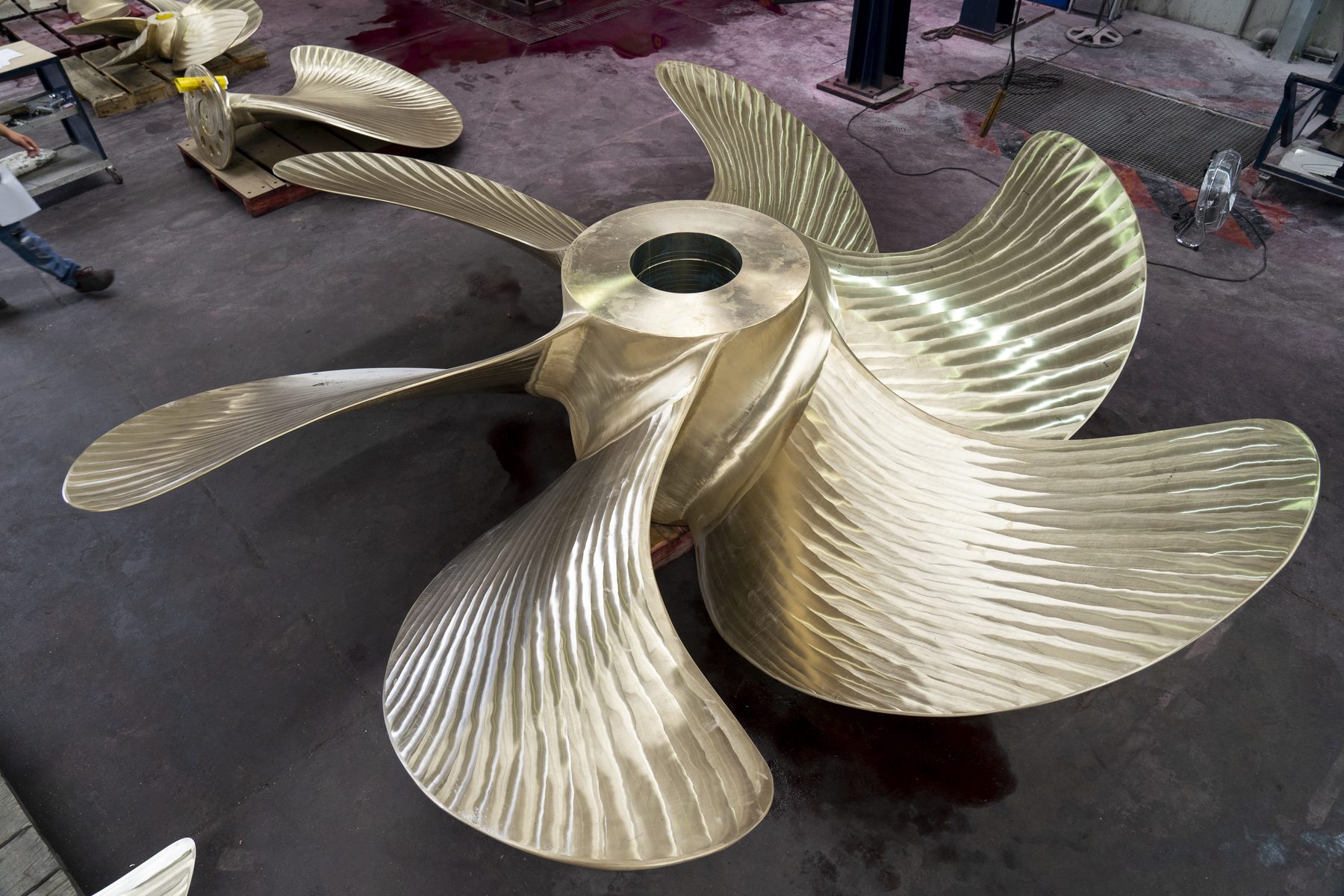
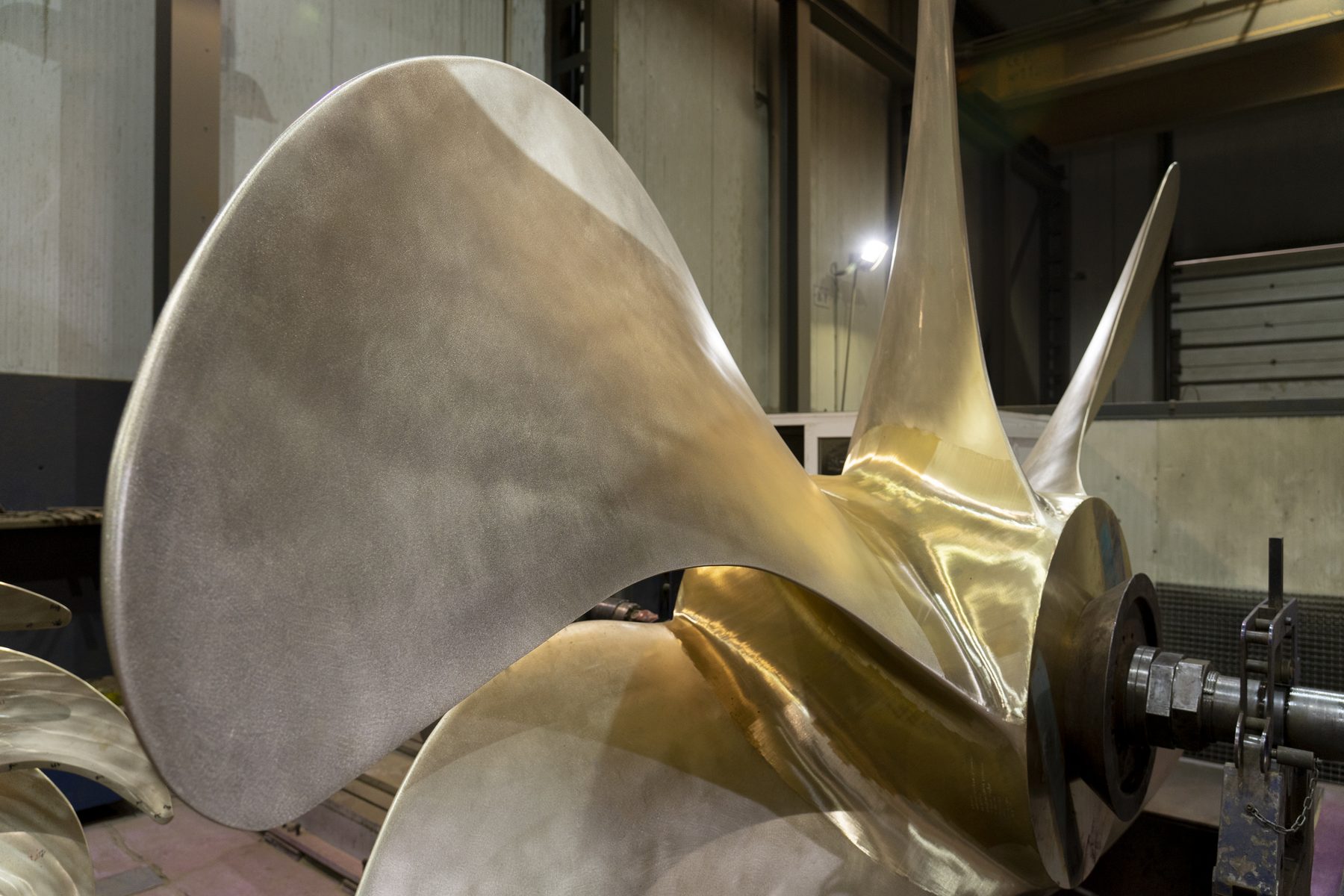
FP Propellers
Fixed-pitch propellers up to 16 t and Ø 5,600 mm, and built-up propellers up to 55 t and Ø 8.4 m. Class II, I and S, fully CNC machined, with stainless-steel capacity.
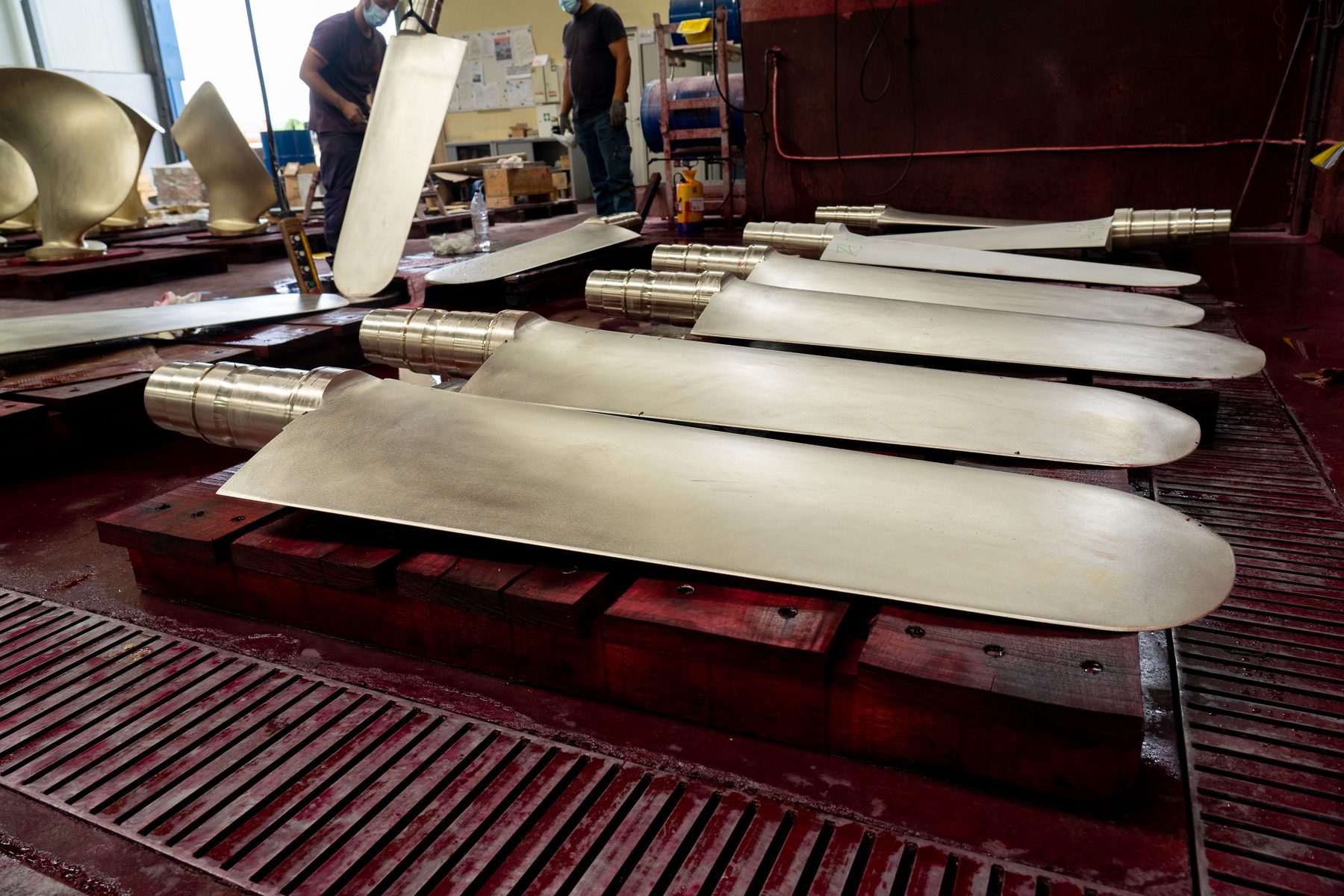
Blades
CP blades up to 9,000 kg in Class II, I and S bronze, plus stainless-steel blades. Outstanding flexibility and versatility.

Hubs
Pre-machined or finished hubs up to 9 tons, validated with pressure, penetrant and ultrasonic testing and solidification simulation.

Components
Caps, covers and other bronze parts up to 9 tons, reproducing any technical drawing with exceptional reliability.
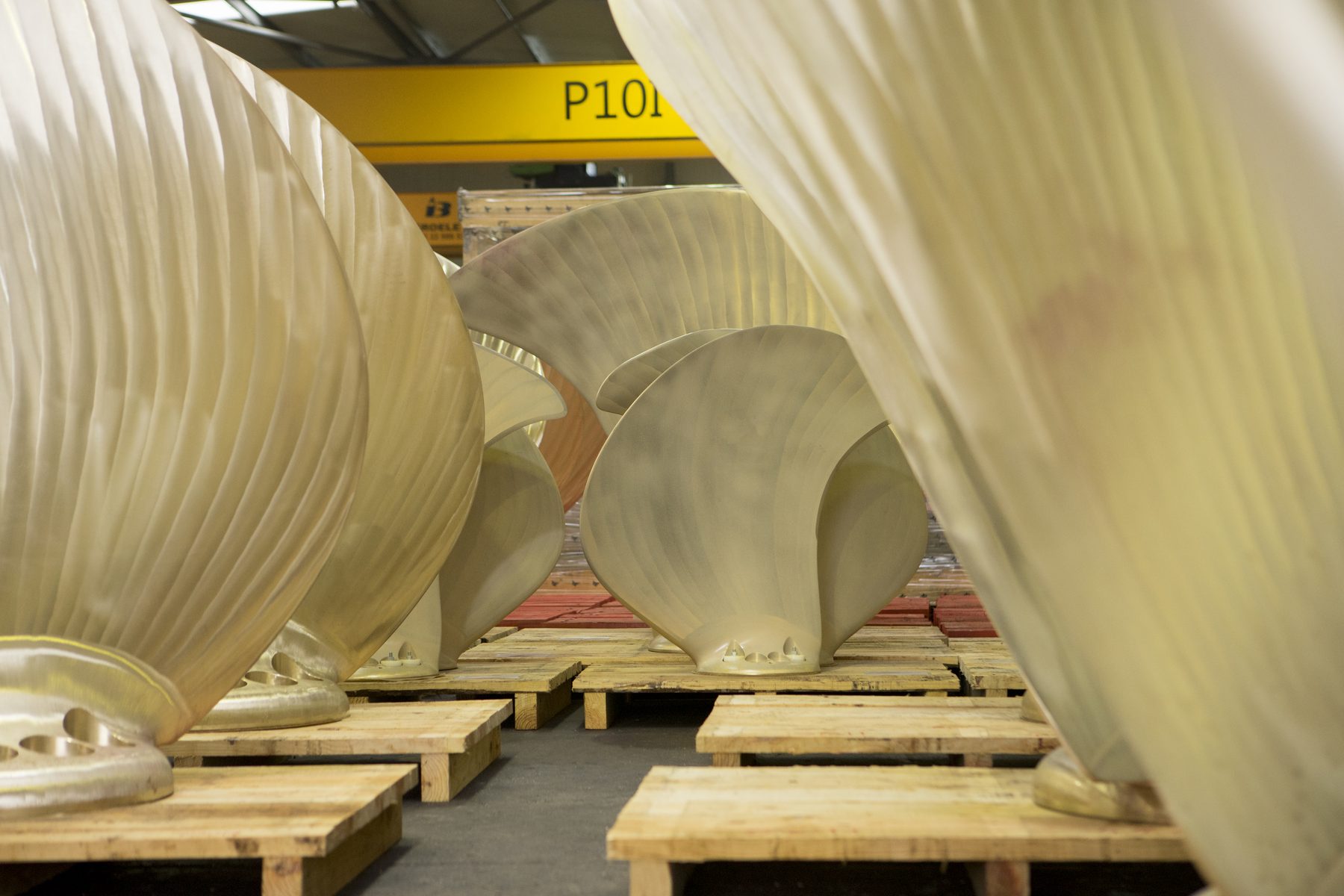

Manufacturing accuracy
Class II, Class I and Class S.
Every propeller and blade leaving Fundilusa is manufactured and verified to an ISO 484 accuracy class agreed with the customer, and checked against it before the classification society signs it off. The class sets the permitted deviation on pitch, blade thickness, section geometry and blade-edge form.
Class II
The working standard for general merchant tonnage, where the duty is steady and the priority is robustness and cost per delivered ton.
- Bulk carriers
- Tankers
- Feeders
- Tugs
Class I
Tighter tolerances on pitch and section geometry, specified where fuel efficiency and vibration behaviour are contractual and the propeller has to hit its design point.
- Container ships
- Ferries
- Offshore
- Ro-Ro
Class S
The tightest tolerance band in the standard. Specified when noise, vibration and cavitation have to be held to a minimum, and when the blade has to survive loads far beyond open-water service.
- Naval & military
- Icebreakers
- Research
- Cruise
Class S in practice
Where the tolerance band gets narrow.
Class S is not a different alloy: it is a far narrower tolerance on the same casting, held through pattern making, casting simulation, CNC machining, hand finishing and dynamic balancing. Getting there consistently is a question of process control, not of a single machine.
It is the class Fundilusa supplies for the work where a propeller cannot be average: naval and military programmes, where radiated noise is a design requirement in itself, and icebreakers and ice-class tonnage, where the blade has to take impact loading that no open-water propeller ever sees.

Can’t find exactly what you need?
If you can draw it, we can most likely cast and machine it. Send us your specification and our engineering team will respond.
Request a quotation