From drawing to delivery
Development & Production
Seven stages, one roof, one standard. Everything from the first 3D model to the finished casting, in bronze and stainless steel, happens inside Fundilusa.

Engineering & simulation
The casting is solved on screen first.
Nothing is poured until it has been simulated. The engineering department models the piece, runs a solidification simulation to predict shrinkage and porosity, and designs the feeding system around the result. Only then does the pattern get milled.
The same department writes the robot programmes for pattern milling, the CNC programmes for turning and milling, and the 3D files used for dimensional control, and issues all of it to the shop floor through a dedicated ERP module.


The process
Seven stages under a single group.
Each step is engineered, monitored and traceable, which is why our propellers are trusted on cruise ships, navies and icebreakers worldwide.

Engineering
The whole production in the company is guided by the information and procedures developed by the Engineering Department. Using specific software for the different production applications (ProEngineer, Inventor, Tebis and Quikcast), Fundilusa engineers plan and monitor every production stage: robot programmes for pattern milling, casting simulations, CNC programmes for turning and milling, and the development of 3D dimensional control files. In short, all the specifications needed to carry out the work with every guarantee of success.
Patterns
Every pattern used for the casting of Fundilusa products is made in our own facilities. Propellers, blades, hubs and other components for propulsion have their first step in the making of the pattern. The robotised and craftsmanship production and 3D measurement carried out and monitored in this first manufacturing stage are essential to obtain a fully guaranteed product.
Casting
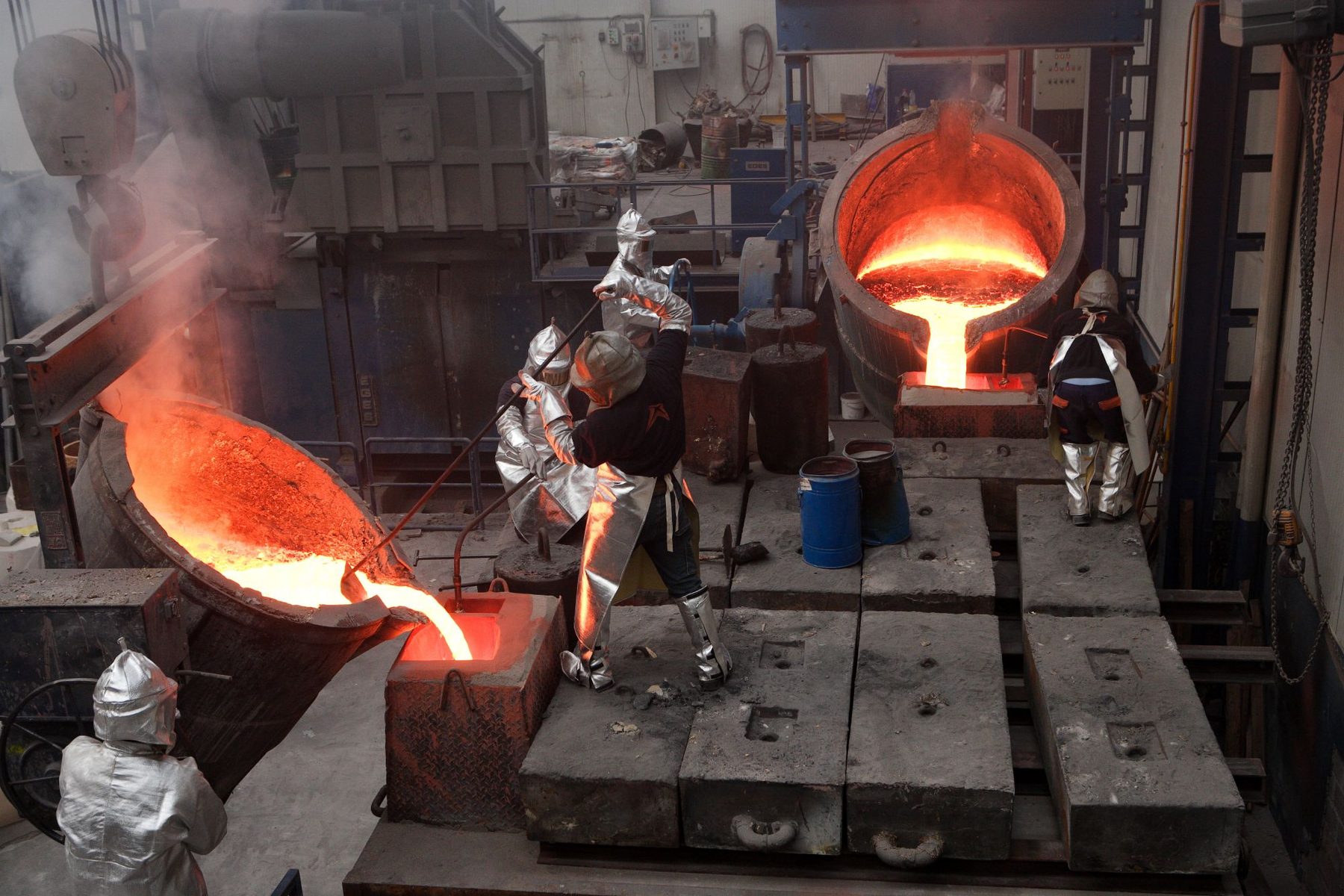
After decades of constant growth and development, Fundilusa today has one of the strongest foundries in the sector. Over 9,480 m² of facilities in Portugal, three induction furnaces of 15, 8 and 5 tons, four sand-mixing machines for moulding and the most modern production controls make our company a solid, reliable choice. Every melt has its own material monitored in the furnace through chemical analysis and degassing procedures, strictly meeting the quality and specification of each material, in bronze alloys and in stainless steel.
Machining
A machine shop like ours, with over 20 machines including lathes, milling machines and auxiliary machinery, ensures the capacity to machine all our products. Client specifications and the CNC programmes needed for production are developed in the engineering department and placed on the shop floor through a dedicated ERP module. Nearly all products are delivered ready for assembly.
CNC milling: 10 milling machines, 3 with 5 continuous axes and 7 with 3+2 axes. Milling of bases up to Ø 1,500 mm and surfaces up to 3,200 mm high. Hubs up to 9,000 kg.
Grinding & Polishing
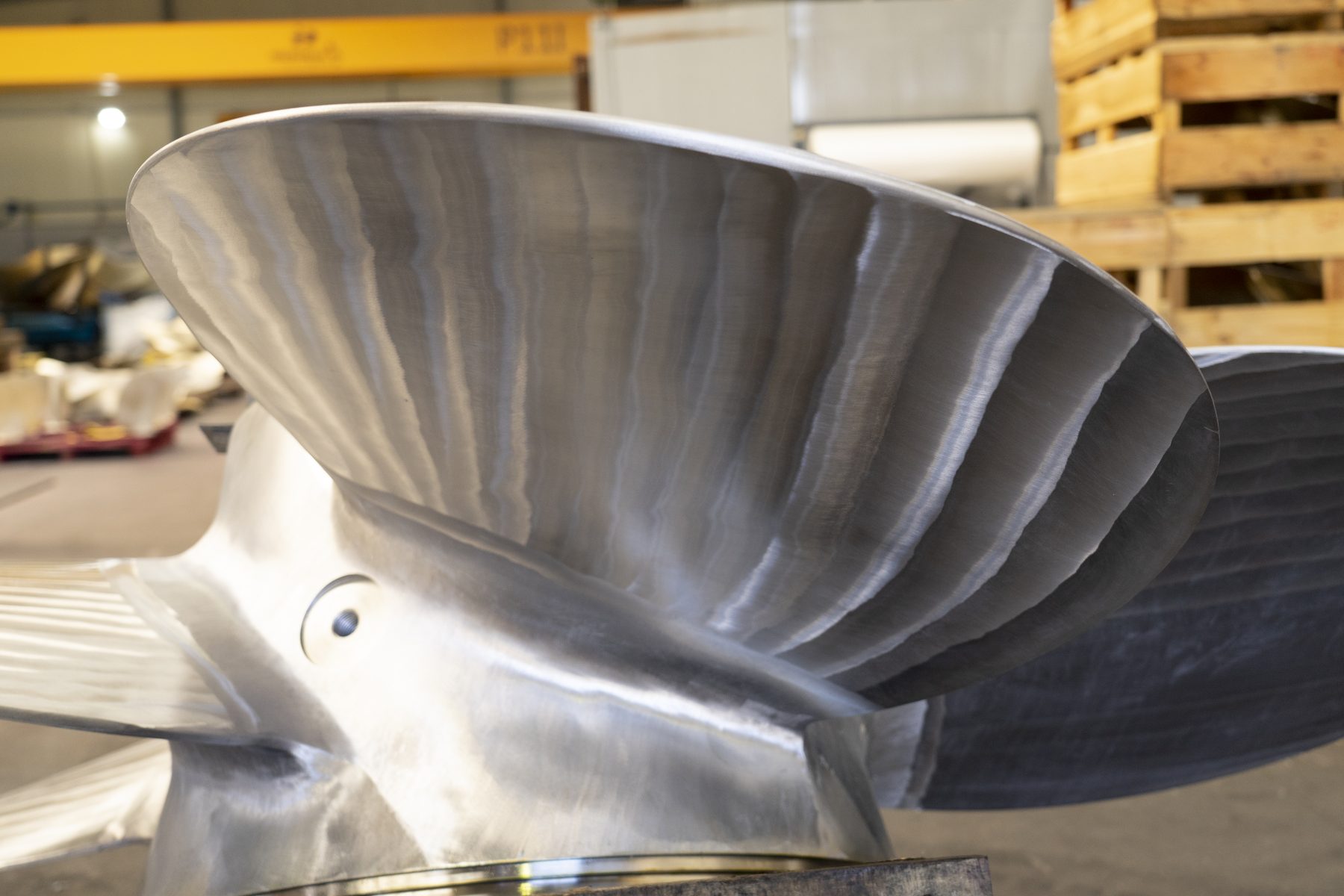
The quality and final geometry of all our products are defined in the grinding and polishing workshop. After rough CNC machining of the blade surfaces, this is where adjustments and corrections are carried out for the perfect geometric definition of the hydrodynamic surfaces that characterise our pieces. Thirty-five polishers, a fleet of overhead cranes, dynamic balancing machines and all the resources for correct final assembly let us serve the most demanding clients.
Quality
From the moment an order is received until it is delivered, the whole production runs under the ISO 9001 quality system, which the Fundilusa group has held since 1999. It ensures traceability of every product throughout the process and continuous improvement of procedures. Chemical analysis, tensile-strength tests, impact tests and dimensional measurements are among the controls carried out at each stage. Our products are classified by the main classification societies before delivery: ABS, GL, DNV, RINA, LRS and BV, among others.
Surface Protection
The last stage before despatch. The surface condition achieved in the grinding and polishing workshop is the condition in which the part has to reach the yard, so finished propellers, blades and hubs are prepared and protected for transport and storage before they leave the works. Nearly all products are delivered ready for assembly.


Materials
Bronze and stainless steel, from the same works.
Most propeller foundries do one or the other. Fundilusa casts and machines Class II, I and S bronze alloys and stainless steel in the same facilities, under the same ISO 9001 system and the same classification-society approvals.
For a buyer that means a bronze and a stainless requirement do not have to be split between two suppliers, two sets of approvals and two delivery schedules. Stainless propellers, blades and components are one of the specialities of the brand.
Classification societies
Every product is classified before delivery: ABS, GL, DNV, RINA, LRS and BV, among others.




FAQ
Capability, answered.
What a shipyard or propulsion OEM asks before issuing an RFQ.